
Barnabas Keynote: Kim Moeller
By Kim Moeller
The Business of Generosity
I have the privilege of having a lot of conversations with people about generosity. I wear three different hats that give me a unique window into those conversations. I serve as the San Diego Area Director for National Christian Foundation. I also work with Impact Foundation, where charitable dollars can be invested into for-profit companies creating social, spiritual, and economic impact. And through Women Doing Well, I help women discover their purpose, passions, and plan for generosity. Across all three of those roles, I get to see people wrestle with a much bigger question than simply, How much should I give?
They are asking what generosity can look like across their entire lives.
I think of it as the business of generosity, and I want to look at it through three lenses: generosity as culture, generosity as strategy, and generosity as investment.
Generosity as Culture
Proverbs 11:25 says, “A generous person will prosper; whoever refreshes others will be refreshed.”
As business and nonprofit leaders, we have tremendous power to establish culture. We encourage people. We coach them. We raise them up. We steward our time, talents, and treasures in ways that affect far more people than we probably realize. That is a tremendous responsibility. It is also an incredible gift.
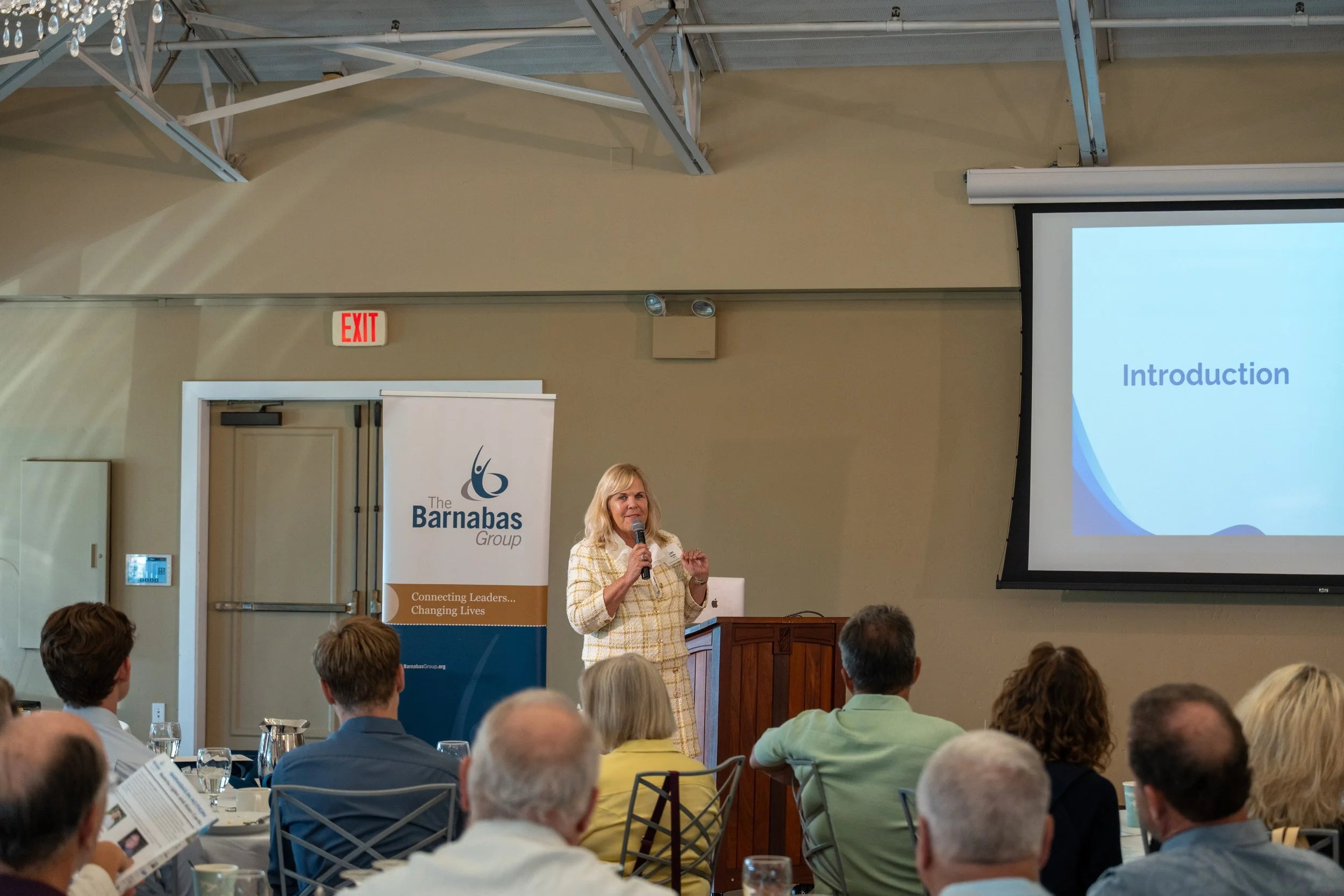
A few years ago, I was speaking in San Diego shortly after reading a headline declaring San Diego the most expensive city in America. I challenged the room with a different possibility: What if that isn't what we're known for? What if San Diego became known as the most generous city in America? Think about what that could change.
I believe the same thing is possible in Sacramento. A relatively small group of generous business and ministry leaders can have an influence that extends across a city, throughout California, and far beyond the borders of our state.
One of my favorite examples comes from the real estate world. I became involved several years ago with Redemptive Real Estate, a gathering of leaders asking what it looks like to use real estate, profits, properties, and company cultures for the Kingdom. One of the leaders involved told a story about an experience that radically changed the way he ran his company. His company was successful. They were generating extraordinary returns. But during a work trip, he was sitting in a jacuzzi with a group of employees and told a story that happened to reveal that he was a Christian. One of his employees looked at him and said, “Wait. I didn't know you were a believer.” She had worked for him for six years. Every time I have heard him tell that story, he cries.
He realized that if someone could work alongside him for six years without knowing something that fundamental about him, perhaps success needed to be measured differently. It changed how he thought about his employees. It changed how he thought about the residents living in the multifamily properties his company owned. It changed how he thought about the entire purpose of the business.
Organizations like Apartment Life became part of that thinking. Apartment Life places people inside apartment communities specifically to build relationships and create community. Residents are known. People become connected. And interestingly, those properties can also experience practical benefits like stronger resident retention and lower turnover. That is what happens when generosity becomes cultural rather than transactional.
This same business leader once woke his wife around four in the morning before a Redemptive Real Estate conference. He told her he felt led to pray for the roughly 200 people who would attend. He got dressed, walked barefoot into the empty ballroom, and sat in every chair, one at a time, praying for the person who would eventually sit there. That is generosity too.
People want to be seen. Your employees do not simply want a paycheck. They want to know they matter. They want to know that you see them and that you care about what God might be calling them to become. As leaders, we can ask, How can this company become a place where that person grows into who God created them to be?
I've seen other organizations build this kind of generosity into their cultures in very practical ways. At Impact Foundation, for example, we begin each workday with prayer. Because our team is remote, we also intentionally create opportunities for meaningful time together. And every employee receives $200 each year specifically to take a personal day away with the Lord. Other companies bring organizations like Marketplace Chaplains into the workplace so employees have someone available to pray with them, listen to them, and walk alongside them during difficult seasons. None of these ideas alone creates a generous culture. But they reflect something deeper.
Generosity is not simply what your company gives away. It is how your company sees people.
Generosity as Strategy
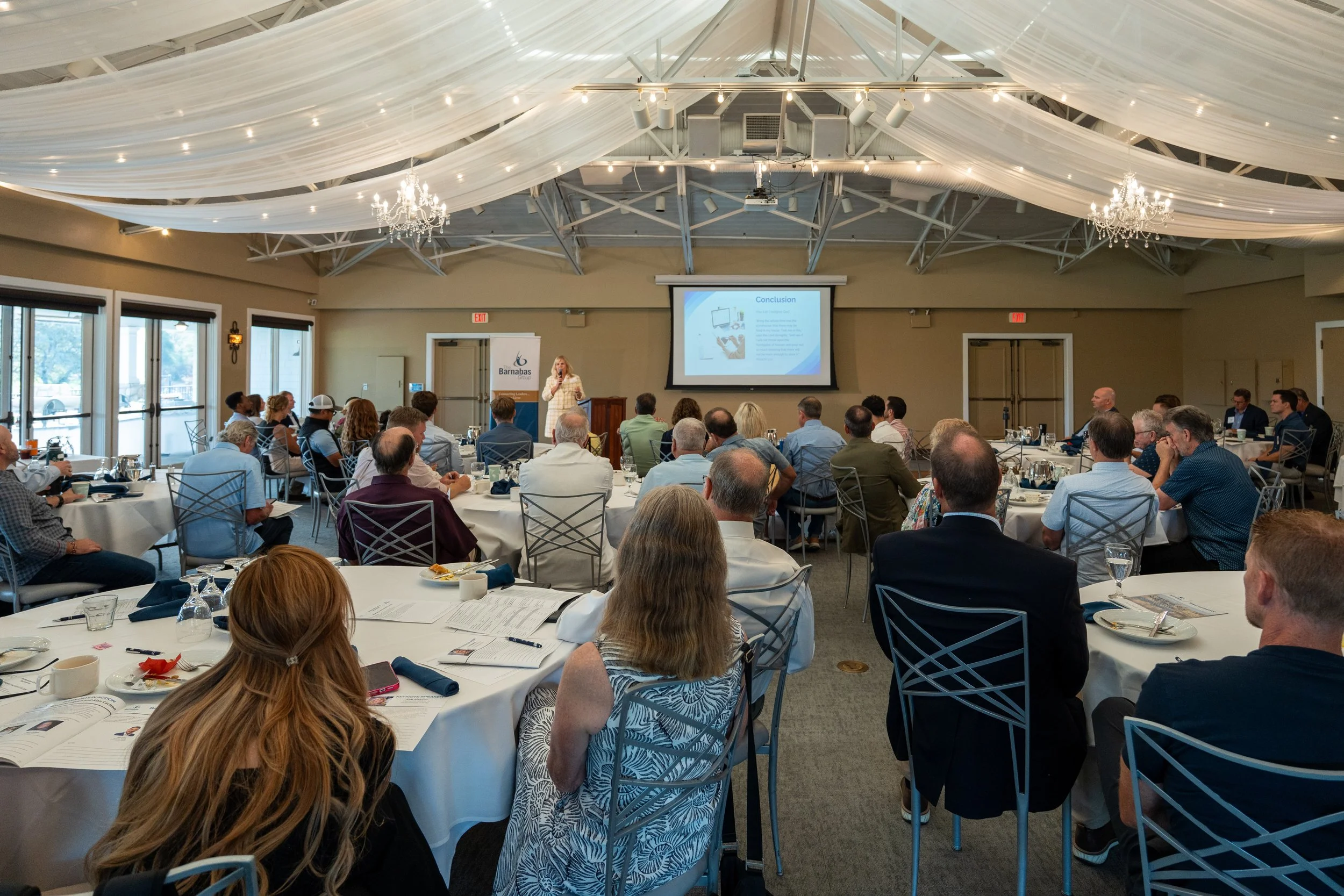
Second Corinthians 9:7 tells us, “Each of you should give what you have decided in your heart to give...for God loves a cheerful giver.”
Generosity requires intentionality. Just as a rowing team needs to know where it is headed and how it will get there, generous people need to think strategically about what God has entrusted to them. One of my favorite examples is Alan and Katherine Barnhart. Alan and Katherine originally thought they might become missionaries. Katherine especially felt called toward the mission field. But Alan's parents owned a relatively small crane company, and eventually they told Alan and his brother that they were ready to step away. The brothers could take over the business or the family would shut it down.
After a lot of prayer and conversation, they decided to take it on. But they asked an important question at the beginning: If this company grows, what do we want to be true of us? They made an unusual decision. They capped their salaries. No matter how successful the business became, their personal lifestyle would have a ceiling. Once the company's operating expenses were covered, additional profits would be divided. Half would be reinvested into the company, and half would go toward missions.
The company grew. And grew. Eventually, there were periods when approximately $1 million per month was becoming available for missions. Imagine seeing the eternal ripple effects of that generosity from heaven someday. I think it would absolutely blow our minds.
The Barnharts also eventually gifted a significant portion of their company to charity. And this illustrates another important part of generosity as strategy: the order in which you do things matters.
The tax code provides significant opportunities for people who want to be generous, particularly business owners and people holding highly appreciated assets. But those opportunities can disappear once a transaction has progressed too far.
Before the Barnharts completed their transaction, they had the necessary conversations with attorneys and charitable-giving experts and transferred ownership interests to charity before a sale occurred. That meant dollars that otherwise could have gone toward long-term capital-gains taxes became available for charitable purposes instead. This is why planning matters.
One of the hardest conversations in charitable planning happens when someone says, “I just sold my business. I paid all these taxes, and now I'd like to become more generous.” We can absolutely help that person give generously. But some extraordinary opportunities may already be gone. If you think you might sell a business, appreciated real estate, or another significant asset someday, begin the generosity conversation before the transaction. Here in Sacramento, Dan Navarra and the National Christian Foundation team can help you think through those possibilities before decisions become irreversible.
Strategy can also be much simpler. I know business owners who help employees with adoption expenses. Others establish funds to respond when employees encounter unexpected hardship. Organizations like Helping Hands can help companies provide assistance to individuals facing difficult circumstances in ways that may otherwise be challenging to structure.
The point isn't that every company should adopt the same program. The question is: Do you have a strategy for generosity, or are you simply waiting for opportunities to find you?
Generosity as Investment
Jesus' words in Matthew 25:21 are familiar to many of us: “Well done, good and faithful servant.” Ultimately, everything we have is an investment entrusted to us for a limited amount of time. A friend of mine in Orange County named Celia Bustamante has made that reality especially tangible to me. Celia is a mother of five, including two children adopted from Africa, and has been deeply involved at Saddleback Church. She has also lived for years with glioblastoma. She is now nearing the end of her life and preparing to meet Jesus. When I think about Celia, I think about all the ways she has invested herself into other people. Someday, she is going to see things she could never see from here. Her story is a reminder that this is real. None of us knows how long we have.
We are stewards of the lives we have been given. We invest in people. We invest our time. We invest our resources. And God has first invested enormously in us. There is also a very literal way generosity can become investment. Through Impact Foundation, people can take assets that have already been given charitably and invest those dollars into for-profit companies pursuing social, spiritual, and economic impact. Those investments might take the form of equity or loans. If the investment generates a return, those dollars remain charitable and can be invested again or ultimately granted to ministries and nonprofits.
I like to call it the gift that keeps on giving.
I've had the opportunity to meet some extraordinary entrepreneurs through this work. One is Mallory Martin, founder of Mended. She works alongside women in India who have survived human trafficking. International Justice Mission helps provide support and trauma care, while Mended creates dignified employment through beautiful handcrafted linens and other products.
Another is Julie Colombino, whose work in Haiti has created employment through manufacturing beautiful leather goods. In the midst of enormous instability and hardship in Haiti, she has continued creating opportunities for people to work, provide for their families, and build a future.
These companies are seeking more than financial return. They are pursuing economic impact, social impact, and spiritual impact together. That raises another question for us. We spend significant time thinking about our investment portfolios. We think about risk, diversification, return, and retirement. But have we ever asked, What is my investment portfolio doing for the Kingdom? Organizations like Faith Driven Investor and Faith Driven Entrepreneur are helping Christians explore exactly that question. And it is worth exploring because generosity takes intentionality. We develop strategies for our wealth. We develop strategies for our health. We wake up early to exercise. We change what we eat. We plan for retirement. Why wouldn't we bring that same intentionality to generosity?
Living Open-Handed
I once spoke with a man in his eighties who told me he had noticed two characteristics in people whom God seems to use powerfully.
The first was generosity.
Do we hold tightly to our calendars, our money, our homes, and our resources? Or do we recognize that all of it has been given to us by God and hold it with an open hand?
Then he told me the second characteristic.
Forgiveness.
That one surprised me. But the more I've thought about it, the more profound it has become. Generosity determines whether we allow what God has placed in our hands to flow through us. Forgiveness determines whether we allow what has happened to our hearts to keep God from flowing through us. Those are two things over which we have tremendous agency: what we do with what God has entrusted to us, and what we do with the wounds and disappointments we have experienced. Can we hold both with open hands? Ultimately, that is the posture of generosity. We cannot outgive God. Everything already belongs to Him. So the question I would leave you with is whether you live from a mindset of abundance or scarcity. Do you really believe that the God of the universe owns it all? Do you believe He can be trusted with what He has placed in your hands?
My daughter was a Division I rower at Gonzaga, so our family spent many hours watching rowing competitions. There is something powerful about watching those boats come across the finish line after every person has pulled together toward the same destination. Scripture tells us that we too are surrounded by a great cloud of witnesses. Someday, each of us will cross our own finish line. Between now and then, perhaps one of the most important questions we can bring before God is very simple:
Lord, is there anything I'm holding too tightly?
Whatever it is, can we open our hands and say:
It's Yours. It was always Yours. How do You want me to use it?
Imagine what could happen if a community of Christian business leaders began living that way.
Imagine what could happen in Sacramento if generosity became embedded in the culture of our companies, intentional in our strategies, and central to the way we invest what God has entrusted to us.
We might just discover that generosity doesn't simply change the recipient.
It changes us, our businesses, our communities, and ultimately the world around us.
Thank you.

About The Author: Kim Moeller, Chartered Advisor in Philanthropy (CAP®)
Kim is advancing the work of the National Christian Foundation, California, in Southern California. As a Chartered Advisor in Philanthropy (CAP®), she brings over two decades of experience in corporate consulting leadership and ministry leadership to the NCF team. Passionate about maximizing resources for God’s kingdom, Kim influences others to steward their time, talents, and treasures with intentionality and impact. She emcees the popular podcast, Generous Girl, exploring how generosity is interwoven in five areas: faith, family, fitness, finance, and friendship. She also works with Impact Foundation to support givers interested in impact investing through their donor-advised funds.