
Ending Extreme Poverty in Our Lifetime: A Vision for Lasting Transformation
Chris Shore | World Vision
Presented at The Barnabas Group Sacramento Quarterly Meeting on October 26, 2026
What would it take to end extreme poverty in our lifetime? And what if the solution begins not with money, but with a fundamental change in how people understand themselves, their potential, and their God-given purpose?
At a recent Barnabas Group Sacramento quarterly meeting, Chris Shore of World Vision shared an extraordinary vision for helping millions of families move out of extreme poverty through biblical empowerment, entrepreneurship, and economic opportunity. Shore, founder of World Vision's microfinance organization, VisionFund, explained how an innovative development model called THRIVE is helping families dramatically increase their incomes and build sustainable futures.
The following is an edited transcript of his keynote presentation, beginning with the introduction delivered by Barnabas Group leadership.
Introduction: God's Heart for the Nations
Managing Partner, Brian Dowd
One of the things I understand about God is that He's obviously bigger than me. But He's also global. If you read Scripture with a certain inclination, you'll see that God is for the nations. In Revelation, at the culmination of everything, every tribe and nation is there worshiping at the throne of God. God is for the nations.
God is also for the poor. You see the poor over and over throughout Scripture, and then over and over some more. God is global. God is for the poor. Those are things we care about here at The Barnabas Group. One of the things we work toward is global expression and global awareness. God's heart is for the world.
That's a little bit in tension with what we're trying to do here at The Barnabas Group, which is to give us engagement opportunities. It's not always easy for us to engage with what's happening around the world, but we're trying. We're working at that. You'll see an intentional effort on our part to have international representation here, whether through ministries or through speakers.
One of the magnificent pieces of this that speaks to me is our own Dave Navarra. He's on our leadership team, and Dave works with World Vision. What he gets to do is connect people with what God is doing around the world through World Vision. He gets to travel to Africa and elsewhere, bringing people with him to tell the story. But he also does that with us here at The Barnabas Group Sacramento. I'm really grateful for Dave and what he does.
And now we have the phenomenal privilege of welcoming Chris Shore of World Vision as our keynote speaker. Chris has spent his career asking a question and working toward its answer: How do we help move people out of extreme poverty with dignity and lasting transformation?
A little bit about Chris's background: He founded VisionFund at World Vision, their microfinance organization, in 2004. Twenty years later, in 2024, VisionFund had provided $840 million in loans to 1.1 million people in 25 countries. Since then, there have been all kinds of breakthroughs and innovations. We're about to hear from one of the thought leaders on the planet about how to help people move forward from extreme poverty and the remarkable things that have been happening.
God is magnificent, and we're about to get another glimpse of that. We've already experienced some of it today, but thanks to Dave and now having Chris Shore with us, we're going to hear even more. Chris, thank you for coming. It's a real honor.
Ending Extreme Poverty for Children in Our Lifetime
Chris Shore, World Vision
Speaking to a group of Christian business leaders, I might assume that you already know World Vision. But I'm not going to make that assumption. World Vision was formed 75 years ago, right here in California. We're a global ministry working in approximately 100 countries. There are three major areas in which we work. The first is long-term community development, which we call transformational development. The second is emergency relief. And the third is advocacy—working with governments and leaders to ensure that systems are in place to help those who are in need.
But World Vision has recently adopted a bold and dynamic strategic goal, and I'm incredibly proud of the organization for doing this. Our goal is to end extreme poverty for children in our lifetime, for the glory of God. That is ambitious. But what exactly is extreme poverty, and how big of a problem are we talking about? According to the World Bank, extreme poverty exists when income falls below three dollars per person per day. Today, approximately 800 million people around the world live in extreme poverty.
I began working in economic empowerment in 1990. It was a dynamic time in world history. Communism, the greatest competitor to a market economy, was collapsing across the Soviet bloc in Eastern Europe. At that time, 43 percent of the world's population lived in extreme poverty. It was an enormous problem. Most of us working in economic empowerment thought the best we could do was put some salve on the problem, nibble around the edges, and help alleviate suffering. But today, our goal has shifted. We've moved from merely alleviating extreme poverty to the possibility of eliminating it altogether. That audacious goal is fueled by the remarkable reduction in extreme poverty—from 43 percent of the world's population in 1990 to approximately 10 percent today.
Extreme poverty is a technical term. It's a measure of income. And ending extreme poverty isn't rocket science. It ends as incomes go up. Incomes have risen around the world since 1990. China and India alone have lifted hundreds of millions of people out of extreme poverty by reforming their economies and unleashing economic opportunity. That same transformation has happened across Asia and Latin America. We're seeing it in many places. And today, perhaps to the surprise of some, extreme poverty is no longer primarily an Asian or Latin American problem.
Approximately 70 percent of people living in extreme poverty today live in sub-Saharan Africa. But where, specifically? More than 75 percent of people living in extreme poverty live in rural areas. This is not primarily an urban problem. Extreme poverty is a rural problem. And two out of every three people living in extreme poverty on our planet today are smallholder farmers.
So instead of asking a broad, academic-sounding question like, "How do we end extreme poverty?" let's change the question a little. When we do, we begin to glimpse a solution. How do we help smallholder farmers make a lot more money in agriculture? That's the question behind World Vision's THRIVE model, and that's what I want to talk about today.
The THRIVE Model: A Proven Path Out of Poverty
World Vision's THRIVE model was born in Tanzania, East Africa, in 2011. We tested the model, and it worked. Smallholder farmers experienced astonishing income growth—two times, three times, four times, and even eight times their previous income in a single growing season. So we tested it again, in other locations within Tanzania, and it worked again. Then we expanded to 9,000 farmers in a region of Tanzania called Mabati. It worked there, too. Over eight years in that region, incomes rose nearly tenfold. We thought, "Maybe we've got something here."
So we took the model to Zambia, Malawi, and Rwanda. Then we decided to bring it to our own hemisphere, testing it in Honduras. And it worked there, too. According to our outside evaluators—and I'm an old finance guy, so I don't do anything unless we're going to evaluate it—every dollar invested in the THRIVE model resulted in $6.67 in economic benefit to the people we serve. I don't know how many of you are investors, but I'd really like that kind of return in my 401(k)! Six dollars and sixty-seven cents in economic benefit for every dollar invested. Not bad.
But what exactly is THRIVE? THRIVE is a multistep approach, with each step up the economic ladder building on the one before it. And one of the most important things we've learned is that the journey out of extreme poverty rarely begins with economics. Let me say that again. The two most important economic tools are the heart and the mind. We've learned that the journey out of extreme poverty begins with belief.
Before someone can transform their circumstances, before they can lift themselves out of poverty—and let me be clear, we never lift anyone out of extreme poverty; they must lift themselves out—they must first believe that transformation is possible. And this is where one of the greatest gifts God has given World Vision in the last 75 years comes in. It's a breakthrough we call the Biblical Empowered Worldview.
The Biblical Empowered Worldview curriculum helps people rediscover eternal truths that poverty and other deeply held worldviews have often buried. What are those truths? That you are made in the image of God. Because God made you, you are creative. You are productive. You are responsible. You are capable. That God's vision for your life is not to live in extreme poverty, but to be fruitful and multiply, to flourish, and to provide well for your family and your children. To have three meals a day, to send your children to school, and to live in a good home. That God made you to reflect His nature and character to others through relationships and compassion, just as Jesus did. That you are called to care for others, to care for creation, and to flourish. And that God wants you to put your faith into action, create a brighter future, and move forward.
Imagine that all your life, you've been told lies. That the spirits of your ancestors, or the spirits of the lake, the trees, or the hills control your destiny. That you don't matter. That, like your parents before you, you are cursed and will live and die in poverty. That you will be poor forever. And now you hear the truth. God made you in His very image. God loves you and wants to be in relationship with you. God wants you to provide well for yourself and your family. God wants you to flourish. For many people, this is the moment the journey out of extreme poverty begins.
Something remarkable is happening. This Biblical Empowered Worldview, which we originally created to address economic problems, is spreading throughout World Vision's work around the world. Not just in our economic empowerment programs, but also in our water programs, in our efforts to end child marriage and child exploitation in Kenya, and throughout our faith and development work. It's radically changing our staff. It's radically changing our understanding of our mission. And it's radically changing our partners. Today, this curriculum is being used in 47 countries.
But the final part of the Biblical Empowered Worldview curriculum is putting faith into action. People need to earn more money to lift themselves out of extreme poverty. To do that, they need economic empowerment so they can leverage their newfound belief in what's possible. You might ask, "Come on, Chris. If they need to make more money, why don't they just get a job?" Because in rural sub-Saharan Africa, there are no jobs. You want a job? You make your own job. Most people living in extreme poverty are self-employed. They're running a small farm, or they're going to start and operate a small business. So how do we help people start businesses?
Savings Groups: Building Businesses from the Ground Up
One of the most powerful tools we've discovered is something we call savings groups. These groups are designed for people who are just starting in business. Typically, 20 to 30 people—about 80 percent of whom are women—come together every week to save money. Why do they save together? Because they want to take loans from the group to start a new business or expand their farms. Members can borrow up to three times the amount they've saved. As everyone saves, the group builds a pool of capital. Then members take turns borrowing the money they need. This isn't rocket science. And here's what's remarkable: We don't put a single dollar into these groups. The capital comes entirely from the participants themselves.
Along the way, they develop financial literacy. They discuss and agree on who should receive a loan. They hear new business ideas and discover new opportunities. They encourage one another. They coach one another. And they want everyone's business to succeed, because they're lending one another their own money! Imagine Dave comes to the group and says he wants a loan to start a restaurant. "Dave, thank you. That's a good idea. But you know, we've tasted your cooking, and it's not very good. Why don't you come back with a better idea?" That's the kind of accountability these groups create.
For many participants, this is the first access to financial capital they've ever had. Businesses are planted. Confidence blossoms. And as those businesses become fruitful, what begins with a mother or father impacts an entire family and eventually a community. Because when people begin saving, investing, and building small businesses, hope begins to spread.
Now, you may have noticed that I said approximately 80 percent of savings group participants are women. What about the men? That's a good question. When we empower women to begin their economic journeys and contribute to household income, the men are often already economically active. They're usually farmers practicing subsistence agriculture—growing just enough food to feed their families. They need to learn how to make a lot more money through agriculture.
We call this market knowledge and access. That's a fancy term for helping farmers become more productive in their farming and more profitable when it comes time to sell. When we begin, approximately 80 percent of the participants in this part of the program are men. So about 80 percent of savings group participants are women, and about 80 percent of participants in market knowledge and access are men. These components work together.
But we always want them to work faster. We don't want people living in extreme poverty for a single day longer than necessary. So we asked ourselves another question. Could savings groups accelerate the process of business creation and growth? Could we help people move out of extreme poverty even faster?
Fast Loans and the Opportunity to Reach Ten Million People
Our microfinance team developed a world-leading innovation we call fast loans. We've learned that when we lend money to the savings group itself, we can preserve all the group's internal disciplines while allowing it to expand its lending capacity and smooth out the availability of cash. That's finance talk. What it really means is that more people can receive larger loans more quickly. And when that happens, all kinds of good things begin to happen. Businesses expand more quickly. Farms become more productive more quickly. Opportunities multiply more quickly. And families move out of extreme poverty more quickly.
The first THRIVE program launched in Tanzania. Did it work? According to our external evaluator, incomes were ten times higher at the conclusion of the program than when we started. We expanded to five countries, and as I mentioned earlier, every dollar invested produced $6.67 in economic benefit for the families we served. So we decided to simplify the model and invest in the highest-impact, lowest-cost interventions so we could take the program to significant scale.
We set a goal of reaching 10 million people—approximately 2.1 million families—and helping them lift themselves out of extreme poverty by providing access to the tools of the THRIVE model. Today, we're working in 11 countries across three continents, operating at approximately 30 times the scale of our original program. That's quite something. Imagine growing a business thirtyfold!
The total cost of this initiative is approximately $344 million over eight years. And our plan involves all 11 country offices co-investing with us. Everybody has skin in the game. Those are big numbers: $344 million and 10 million people. But even I can do that math. It works out to approximately $35 per person to provide the tools they need to lift themselves out of extreme poverty. Or about $175 per family. Think about that.
Could Ending Extreme Poverty Be One of the Greater Works?
Let me conclude with a little historical perspective. Two hundred years ago, 90 percent of the world's population lived in extreme poverty. Today, 90 percent of the world's population does not live in extreme poverty. That is a remarkable achievement, and far too few people think about it.
Today, the world stands at a point where ending extreme poverty is entirely possible within our lifetimes. Never before in human history has it been conceivable that one person could write a check—a very big check, perhaps $30 billion—and make ending extreme poverty forever possible.
So let me leave you with a question to ponder. In John 14, Jesus said something that I've never heard a preacher preach about. He said:
"Truly, truly, I say to you, whoever believes in me will also do the works that I do; and greater works than these will he do, because I am going to the Father." — John 14:12 (ESV)
Here's the question I want to leave you with: Is ending extreme poverty in Jesus' name one of those greater works? One of those greater things Jesus was talking about in John 14:12?
And what if it is?
Thank you for the opportunity.
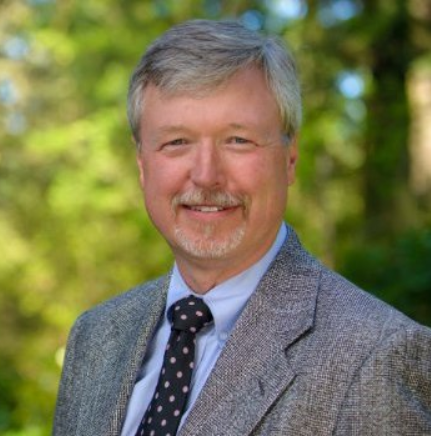
About The Author: Chris Shore
Christopher Shore is the Chief Development Officer, Economic Empowerment for World Vision USA. Chris’ role is to globalize the work of building radically improved and resilient livelihoods for small-holder farmers. This is work that Chris previously led for World Vision’s three Africa Regions, and of which he has been a principal architect. This work takes aim at the critical problems of both entrenched poverty and the effects of rapidly changing environmental challenges. The work seeks to improve three critical systems affecting the small-holder farmer: The end-to-end business processes of farming; the on and off-farm natural resource management supporting the farm; and the shock and emergency management systems supporting the small-holder farmer and his/her community. It sits on the foundation of building the empowered worldview needed to overcome endemic dependency.
Chris is one of World Vision’s serial “intrapreneurs”. Prior to his current role and activities, he initiated and led World Vision’s global environment and climate work when he began investigating if and how to harness the emerging markets for carbon credits for poverty alleviation. His global team worked on issues of environmental restoration and protection, as well as climate change adaptation, mitigation, and advocacy.
Through 2008, Chris led World Vision’s work in Economic Development. In this capacity, World Vision laid out a strategy of ensuring sustainable access to financial services, markets, technology, information, and know-how. Chris led the development of World Vision’s first work in economic recovery and into innovative ways of raising microfinance capital. In the area of microfinance, under Chris’ leadership, World Vision grew its work in microfinance from $18 million to $175 million in lending capital, working in 47 countries. Chris was the founder of VisionFund International, which is World Vision’s holding and operating company for its microfinance operations. VisionFund has continued to grow and now has over $600 million in its lending portfolio, serving 1 million clients.
Prior to moving to California in 2000, Chris was National Director and led World Vision’s work in Romania.