
The Importance of Vomit
By David Burke, Barnabas Partner & Leadership Team Member
“I didn’t mean to vomit all over you.”
“I didn’t mean to dump all of that on you.”
No, these aren’t things overheard at a hospital emergency room or said by a server at a restaurant. It’s what I hear on a regular basis.
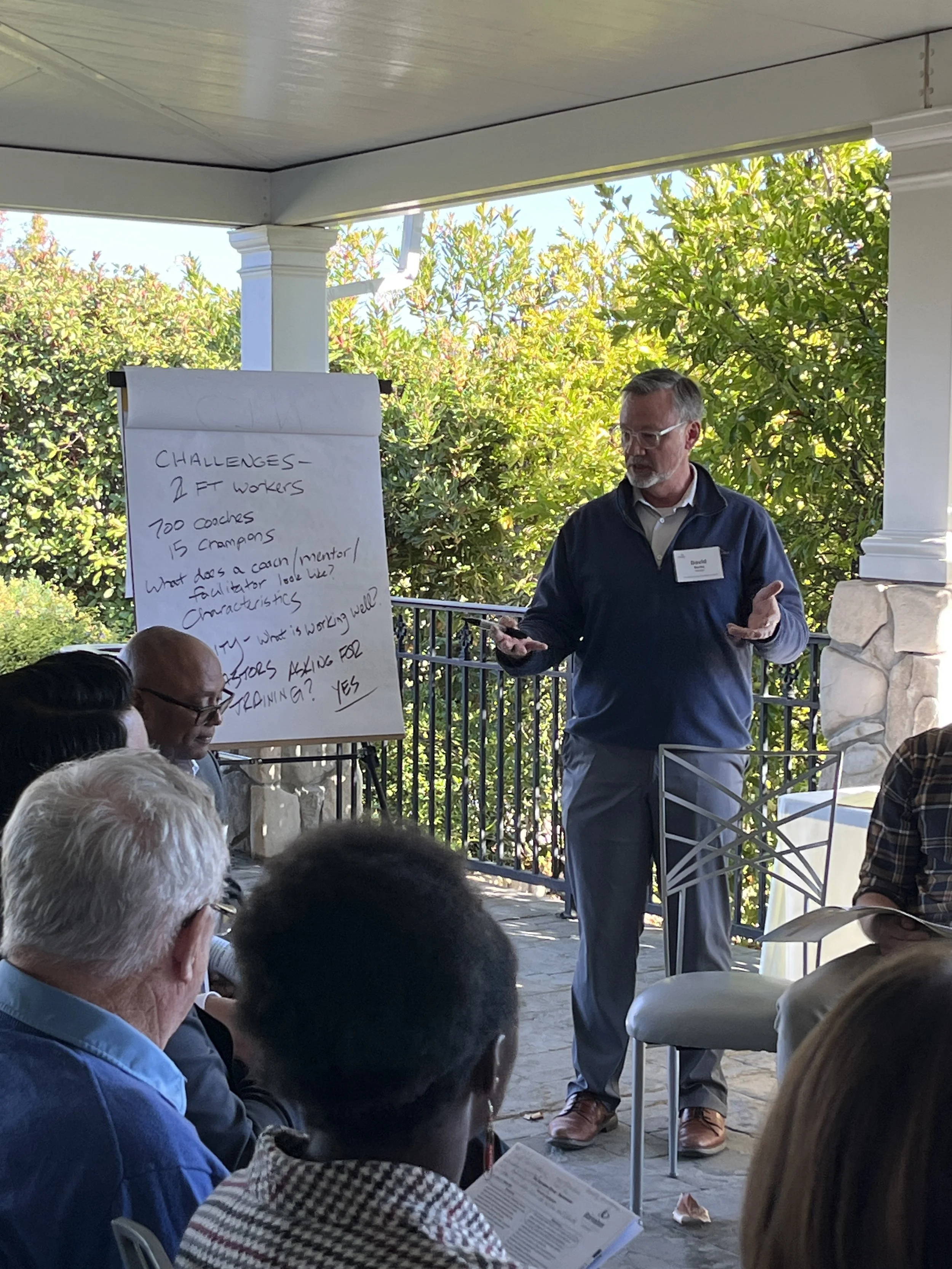
David serves as a facilitator of ideations, and helps ministries prepare to present at Barnabas.
After 25 years as a pastor, I have spent the last two years coaching leaders with an organization called Standing Stone. Standing Stone began with a vision from a couple, Jim and Debbie Hogan, and was encouraged by Barnabas Founder and pastor Bob Shank. Jim and Debbie saw that three generations of pastors had to leave the ministry for a variety of reasons, but a common theme was a hidden life where these pastors felt they had no one to share their struggles openly. What began as a retreat ministry over 20 years ago at Standing Stone Ranch in Colorado has now grown to include over 300 people serving nearly 4,000 pastors monthly across the United States.
So what do I do? I sit with leaders from local churches, nonprofits, and businesses and listen. I ask questions, make observations, and challenge assumptions. I ask people to clarify why certain words and metaphors have meaning. I did a lot of those things working in college ministry and the church. I went on to get further training at Western Seminary, which offered a credentialed program in Transformational Coaching. And now I am seeing how important a coach can be for leaders. I had two such coaches while I was a pastor, and their influence had a lot to do with what I’m doing now. The philosophy of “pure coaching” is this: it is NOT the expertise I bring as a coach to a client. Rather, it is a strong belief that the client knows the history and culture of their organization, their fellow workers, AND the resources they have around them and within them to get them unstuck from their current situation. Transformational coaching is also less about coaching the problem, but coaching the person, and how they react to and solve organizational problems.
So, why do I hear those phrases–about vomiting and dumping–fairly often?
What strikes me is that these leaders don’t have another place to talk freely and openly. It is not uncommon to be referred to someone through Standing Stone, meet them for the first time, and, within 20-30 minutes, have them confiding in me all kinds of things. Which usually precipitates one of those phrases when they realize they have been talking since we sat down.
The many “hats” that leaders wear make it difficult for them to feel safe sharing real thoughts and opinions with just anyone, especially one who is within their organization. When these leaders finally have someone sitting who is with them and for them, they feel safe to “vomit” and dump.
These kinds of phrases also mean that they have been holding it in for a long time. There is something within them that they know needs to get out.
Within the Barnabas Group, I am excited to walk alongside non-profit executives as they apply, prepare, and present to a group of committed professionals who want to use their knowledge and expertise to help that organization solve a particular problem. There is less “vomiting” here, but there is a “dumping” of multiple questions and problems to get to the “Big Question” that really needs to be asked to move the organization from one place to another.
I count it a holy privilege to coach other leaders. I do not take it for granted when someone trusts me with their stories, questions, doubts, and fears. And, it is such a joy to celebrate the “wins” when leaders report back to me the changes they are seeing in themselves and how they relate to others.
My question for you is this: Who can you vomit on?
About The Author: David Burke

David is passionate about seeing leaders thrive and flourish, providing coaching and care for leaders in multiple spheres with Standing Stone ministry. A former atheist turned pastor, David served in college ministry, non-profit, and local church contexts in associate and senior roles for 25 years. He holds a doctorate from Fuller Seminary in the church as an entrepreneur and has an ICF coaching credential through Western Seminary. He is married to Kelsey, a gifted artist and art teacher in the Sacramento area, and they have six children.